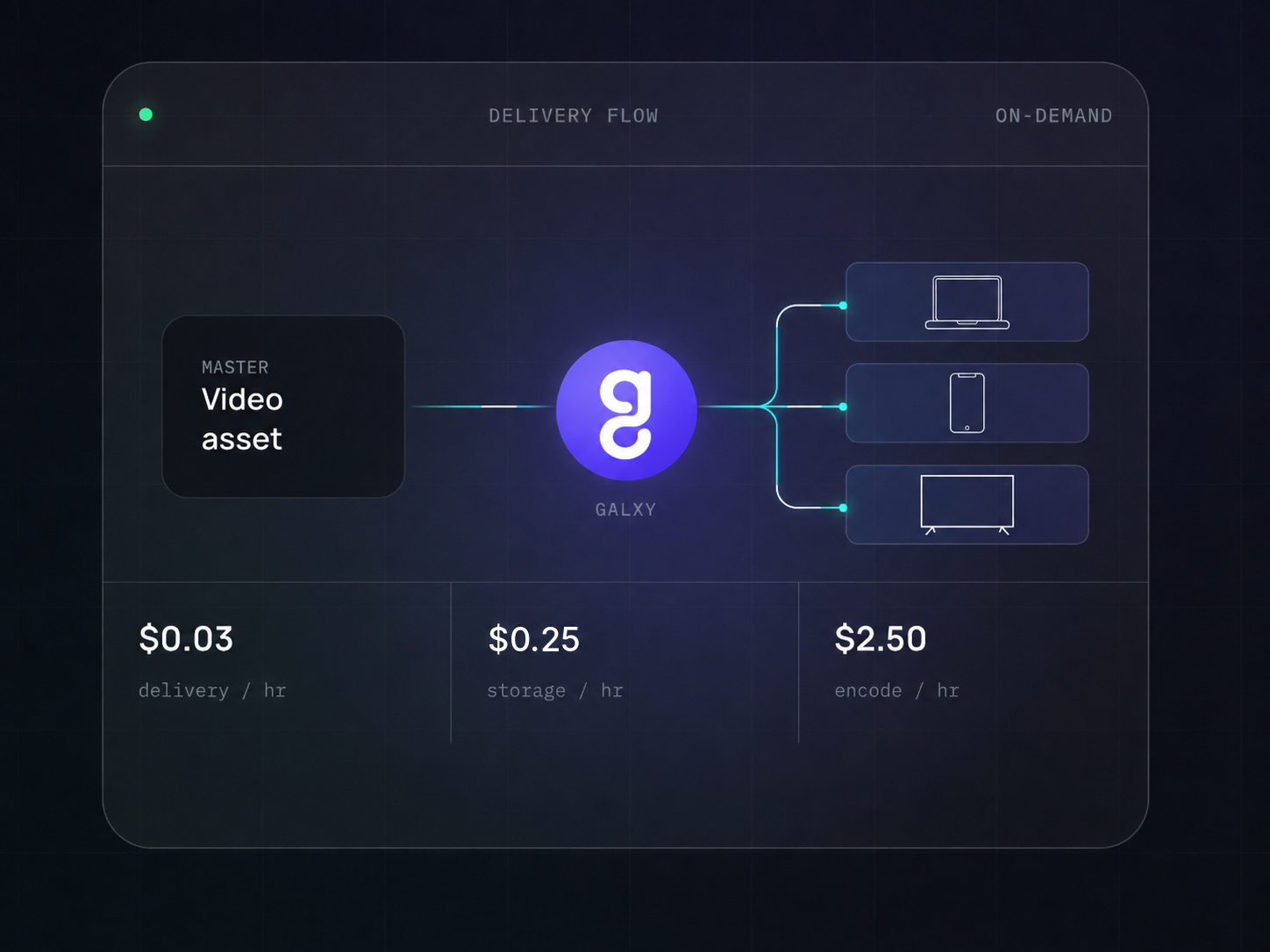
The meaningful differences often show up in workflow, media-specific tooling, pricing units and how well delivery connects to the rest of the video stack.
What they share
Both are designed to distribute content closer to audiences and reduce dependence on one distant origin.
What video teams care about
Large media files, sustained viewing sessions, bitrate decisions, playback quality and catalog workflows make video delivery operationally different from serving ordinary site assets.
Choose the model, not the label
Evaluate how the service connects to encoding, storage, content management, analytics and your application's workflow. Also normalize pricing into units your team can forecast.
Next step
If you are evaluating a platform rather than learning the concept, compare the operational workflow and the cost model together.